Meta Title: AI Agents for Marketing: The Next Big Shift in Digital Marketing
Meta Description: Discover how AI agents are revolutionizing digital marketing in 2026. Learn use cases, benefits, challenges, statistics, and strategies to leverage AI-powered marketing automation for business growth.
Introduction: A New Chapter in Marketing History
Every decade or so, a technology arrives that doesn’t just improve how marketing is done — it rewrites the rulebook entirely. In the early 2000s, the internet democratized access to global audiences and gave birth to digital advertising. In the 2010s, social media handed everyday consumers the power of publishers and forced brands to reimagine their communication strategies. Today, in 2026, we are witnessing the dawn of another such transformation: the rise of AI agents in marketing.
Artificial Intelligence has already transformed how businesses approach marketing in meaningful ways. From chatbots and recommendation engines to predictive analytics and automated content creation, AI has become a critical component of modern marketing strategies. These tools have helped marketers work faster, target audiences more precisely, and make smarter decisions with data. But they were still tools — instruments that humans picked up, used, and put down.
AI agents are fundamentally different. They don’t wait to be picked up. They act.
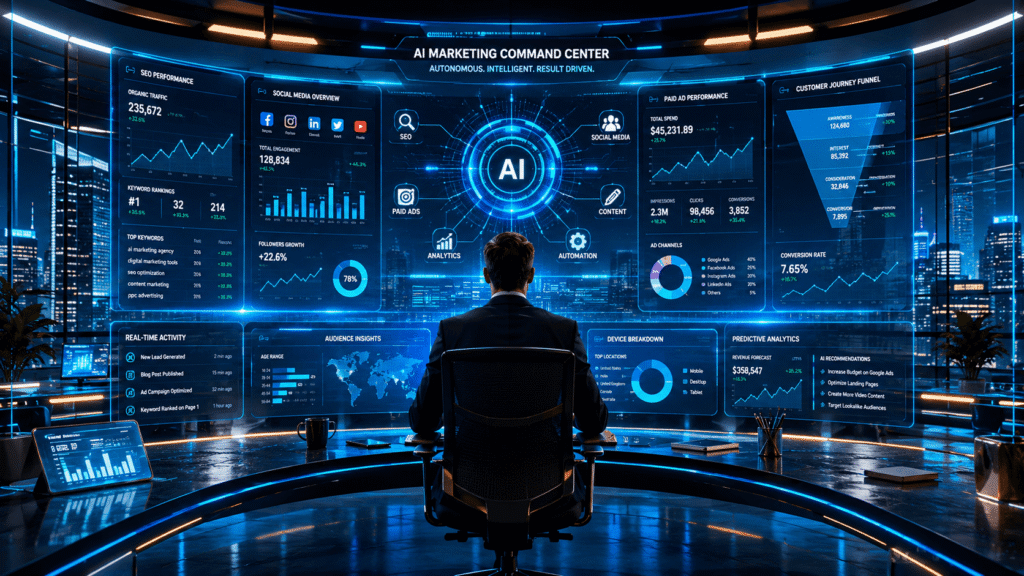
Unlike traditional AI systems that perform a single task based on predefined instructions, AI agents can think, plan, execute, learn, and optimize campaigns autonomously. They are not just faster workers — they are intelligent collaborators that operate more like digital employees than software tools. They can interpret goals, assess environments, build strategies, execute multi-step plans, and improve themselves through experience.
Industry experts believe that AI agents will reshape marketing departments in the same way cloud computing transformed IT infrastructure and social media changed brand communication. Early adopters are already reporting transformative outcomes: reduced costs, accelerated campaign performance, deeper customer insights, and the ability to scale operations without proportionally scaling headcount.
The question is no longer whether AI agents will impact marketing. Businesses that ignore this shift risk falling behind competitors who are already deploying autonomous AI systems across their marketing operations. The real question is how quickly businesses can adapt — and how strategically they move.
This comprehensive guide explores what AI agents are, why they matter, how they are being applied across every major marketing channel, what challenges organizations must overcome, and how forward-thinking businesses can prepare for the autonomous marketing era that is already underway.
What Are AI Agents?
To understand why AI agents represent such a seismic shift, it helps to be precise about what they actually are — and how they differ from the AI tools marketers have been using up to now.
AI agents are autonomous software systems capable of performing complex, multi-step tasks with minimal human intervention. They are built on large language models and other advanced AI architectures, but they go far beyond simple input-output interactions. Rather than waiting for a human to ask a question and returning an answer, AI agents can proactively pursue objectives, gather information from multiple sources, make decisions based on context, take action in digital environments, and refine their own performance based on outcomes.
At their core, AI agents possess several capabilities that distinguish them from conventional automation or generative AI tools:
Goal-oriented reasoning: AI agents can interpret high-level objectives and translate them into actionable plans. You don’t need to spell out every step. You provide the destination; the agent figures out the route.
Environmental awareness: Agents can monitor and interact with their environment in real time. They read data feeds, scan websites, process emails, interact with APIs, and interpret signals from multiple systems simultaneously.
Decision-making under uncertainty: Rather than following a rigid script, AI agents evaluate options, weigh tradeoffs, and select the best course of action based on available information — even in situations they haven’t explicitly been trained for.
Iterative learning and adaptation: AI agents improve over time. Each campaign they run, each piece of content they create, each customer interaction they manage generates feedback that informs future behavior.
Tool use and action execution: Modern AI agents can use external tools — search engines, databases, content platforms, advertising systems, CRM software — to accomplish tasks. They don’t just think; they do.
Think of an AI agent as a virtual marketing strategist that never sleeps, never gets fatigued, can process unlimited data simultaneously, and becomes more effective with every passing day.
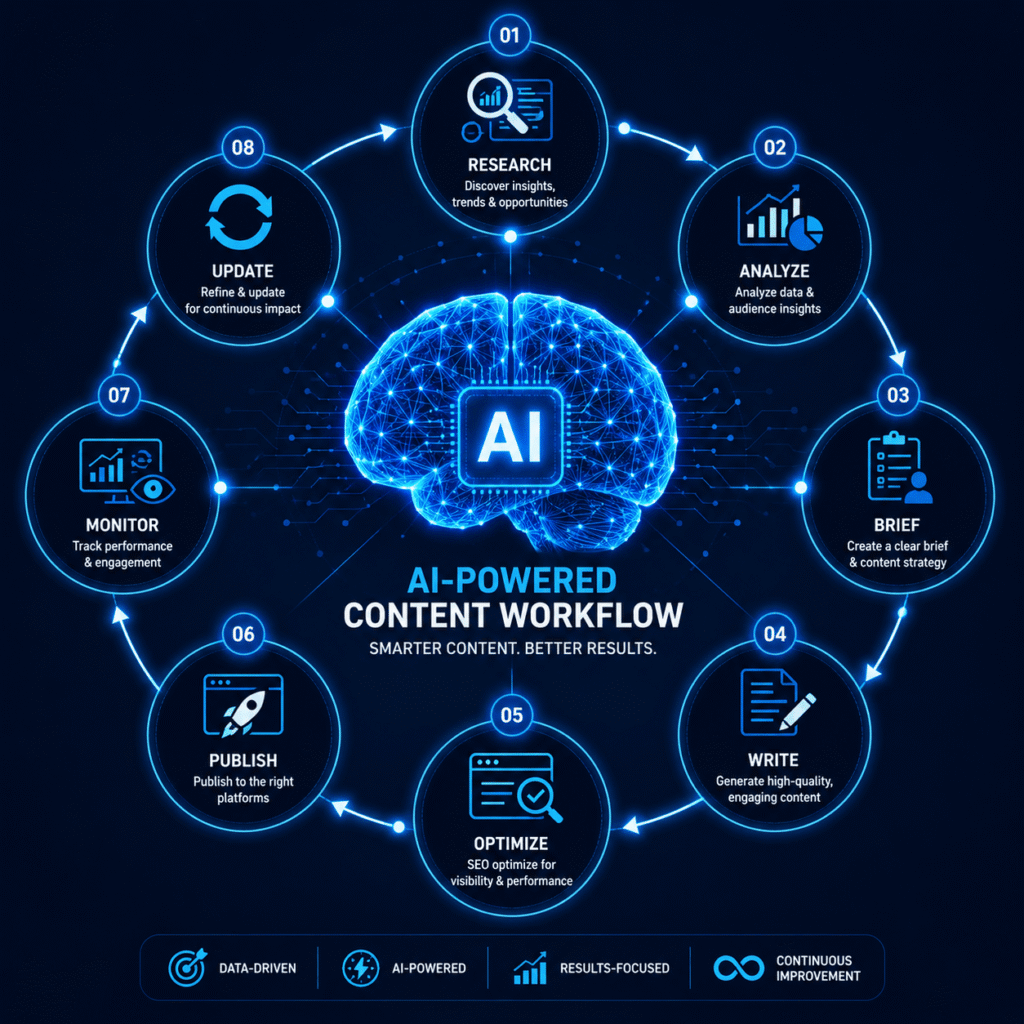
To make this concrete, consider a content marketing example. A traditional AI writing tool, when prompted, generates a blog article. The interaction ends there. An AI marketing agent, given the same goal, would first research trending topics in the industry, analyze what competitors are publishing and how it is performing, identify keyword gaps and search opportunities, develop a content brief, draft the article, optimize it for SEO, schedule it for publication, monitor how it ranks over time, and proactively update the content when it begins to slip in search results — all without a human managing each step.
This is not incremental improvement. It is a qualitative leap.
Why AI Agents Are Becoming the Next Big Marketing Shift
Several powerful forces are converging to make 2026 the inflection point for AI agent adoption in marketing.
The Explosion of Marketing Data
Modern marketers are swimming in data. Businesses collect information from websites, social media platforms, CRM systems, email campaigns, search engines, customer support channels, mobile applications, third-party data providers, and more. The volume, velocity, and variety of this data have grown exponentially, and it continues to accelerate.
The problem is that most of this data goes underutilized. Marketing teams simply cannot process it fast enough or comprehensively enough to extract full value. Critical patterns get missed. Opportunities are identified too late. Campaigns run on incomplete insights.
AI agents change this equation entirely. They can process millions of data points in real time, identify non-obvious correlations, surface actionable insights, and translate those insights directly into campaign adjustments — all within the same operational cycle. The gap between data collection and data-driven action collapses from weeks to milliseconds.
Rising Customer Expectations
Today’s consumers have been trained by the best digital experiences in the world to expect immediacy, personalization, and relevance. They expect instant responses when they reach out to a brand. They expect recommendations that reflect their actual preferences and behaviors. They expect communication that feels tailored to them as individuals, not broadcast at them as demographic segments.
Meeting these expectations at scale using traditional marketing approaches is prohibitively expensive. You cannot hire enough people to provide genuinely personalized experiences to thousands or millions of customers simultaneously. Conventional automation can simulate personalization through rule-based segmentation, but customers increasingly see through it.
AI agents provide scalable, genuine personalization at unprecedented levels. They can maintain individualized customer profiles, track behavioral signals in real time, adapt messaging dynamically, and deliver contextually relevant experiences across every touchpoint — without human intervention at each step.
The Increasing Complexity of Marketing Operations
The modern marketing ecosystem has never been more complex. A comprehensive digital marketing strategy now requires expertise and execution across search engine optimization, pay-per-click advertising, email marketing, social media management, content marketing, influencer partnerships, marketing automation, conversion rate optimization, data analytics, and more. Each of these disciplines has its own platforms, best practices, and performance metrics.
Coordinating activity across all of these channels simultaneously — ensuring consistent messaging, optimizing spend allocation, timing campaigns for maximum impact — is extraordinarily difficult for human teams. Silos develop. Opportunities are missed. Execution is inconsistent.
AI agents can coordinate activities across all channels simultaneously. They maintain a unified view of the customer journey, ensure brand consistency across touchpoints, allocate resources dynamically based on performance data, and identify cross-channel optimization opportunities that human teams would struggle to see.
The Maturation of AI Technology
The technical preconditions for effective AI agents have finally come together. Large language models have reached the capability threshold required for sophisticated reasoning. Tooling infrastructure — APIs, integrations, orchestration frameworks — has matured significantly. Computing costs have fallen dramatically, making large-scale AI deployment economically viable for businesses of all sizes. And the agent frameworks themselves have become more reliable, capable of completing complex tasks with increasing consistency.
The technology is ready. The question now is organizational readiness.
The Market Opportunity: Numbers That Demand Attention
The business case for AI-powered marketing is compelling and growing more so by the quarter.
AI adoption among marketing teams has exceeded 80% across enterprise organizations, with usage particularly concentrated in content generation, data analysis, and campaign optimization. Organizations that have deployed AI meaningfully in their marketing operations consistently report significant productivity gains — many citing the ability to produce more output with the same or smaller teams.
Marketing automation platforms, which provide the infrastructure on which AI agents operate, continue to experience double-digit annual growth. Investment in generative AI infrastructure globally is projected to reach hundreds of billions of dollars over the next decade, with marketing applications representing a major share of that investment.
Perhaps most telling are the performance outcomes reported by early AI agent adopters. Companies using AI agents for paid advertising report meaningful improvements in return on ad spend. Organizations deploying AI agents for content marketing report significant reductions in content production costs alongside improvements in organic search performance. Businesses using AI-powered personalization report higher conversion rates, improved customer lifetime value, and better retention metrics.
These are not marginal gains. They represent the kind of competitive advantages that, over time, compound into industry-defining gaps between leaders and laggards.
Learn how autonomous AI systems are transforming campaign management, customer journeys, and predictive marketing in this detailed guide: AI Agents in Digital Marketing 2026 .
How AI Agents Differ from Traditional Marketing Automation
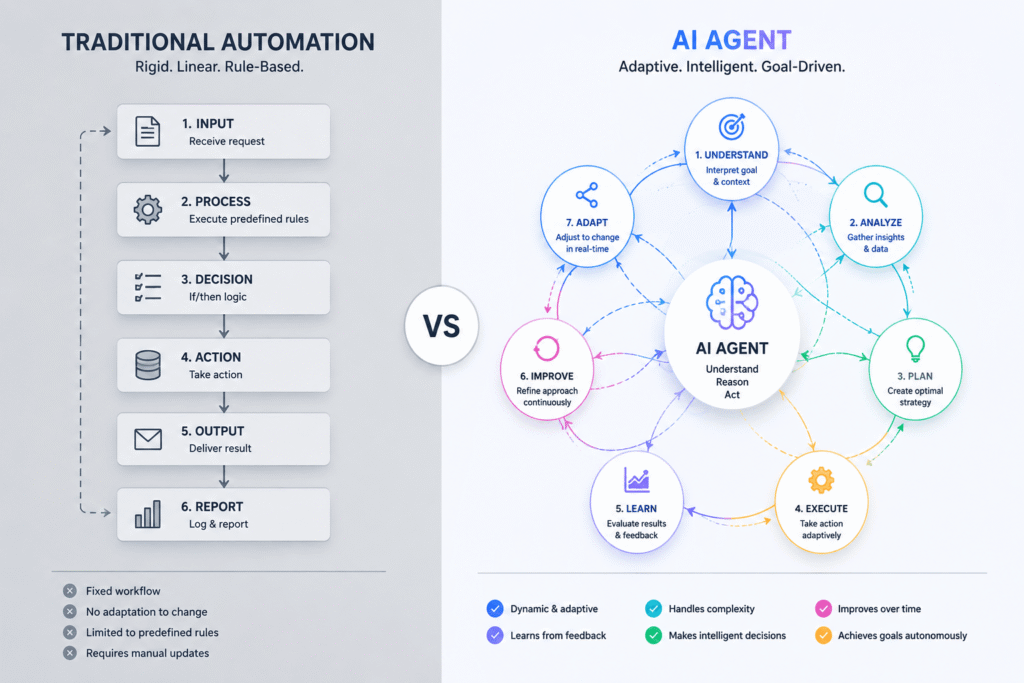
One of the most important distinctions to understand — and one that is frequently confused — is the difference between AI agents and traditional marketing automation. Many marketing professionals, upon first hearing about AI agents, assume they are simply a more sophisticated version of the automation tools they already use. This misunderstanding leads to significant underestimation of both the potential and the disruption that AI agents represent.
Traditional Marketing Automation: Rule-Based Rigidity
Traditional marketing automation tools operate on predefined rules and conditional logic. They are enormously useful for systematizing repetitive workflows, but they are fundamentally static. They do what they are told to do, in the order they are told to do it, under the conditions they are configured to respond to.
A classic example: if a prospect downloads an ebook, trigger a five-email nurture sequence over the following two weeks. The system executes this workflow reliably and consistently. But it executes it identically for every prospect, regardless of individual behavior signals. A prospect who opens every email and visits the pricing page three times gets the same next message as a prospect who never opens a single email. The workflow never adapts unless a human marketer manually reconfigures it.
This is powerful for scale and consistency. But it is not intelligence.
AI Agents: Dynamic, Self-Improving Reasoning
AI agents operate in a fundamentally different mode. They don’t follow scripts — they pursue objectives. They don’t execute fixed workflows — they reason about situations and determine the best course of action in context.
Taking the same ebook download scenario: an AI marketing agent would begin by analyzing the prospect’s behavior comprehensively. It would review their browsing history, assess their engagement patterns, evaluate buying intent signals, examine their company profile and industry context, and compare their behavior to similar customers who did or did not convert. Based on this analysis, it would determine the optimal messaging approach, select the most appropriate communication channel, choose the best timing, and craft a personalized message calibrated to move this specific prospect forward.
Then it would monitor the outcome. Did the prospect respond? Did they convert? Did they disengage? Each outcome becomes training data that refines the agent’s future decision-making. The process continuously improves.
This is why AI agents represent a transformational leap rather than an incremental improvement. The gap between automation and agency is the gap between a vending machine and a skilled sales consultant.
Key Applications of AI Agents Across Marketing Channels
1. Content Marketing at Scale
Content creation has historically been one of the most resource-intensive activities in marketing. Producing high-quality, strategically targeted content at the volume required to compete in organic search and social media requires significant human effort: research, strategy, writing, editing, optimization, and ongoing maintenance.
AI agents are transforming this equation. A sophisticated content marketing agent can independently conduct keyword research to identify high-opportunity topics, analyze the competitive content landscape to determine positioning angles, generate comprehensive content briefs, draft long-form articles, optimize content for target keywords and user intent, schedule and publish content, monitor search ranking performance, and proactively identify when content needs to be refreshed or updated.
The implications are profound. Organizations that previously produced two or three pieces of content per week can now produce twenty or thirty — with consistent quality, strategic targeting, and ongoing optimization built in. Content becomes a continuously improving asset rather than a static publication.
Beyond volume, AI agents also improve content quality by eliminating the gaps between strategy and execution. Every piece of content is produced according to research-backed briefs. Every optimization recommendation is implemented systematically. Nothing falls through the cracks.
2. Search Engine Optimization
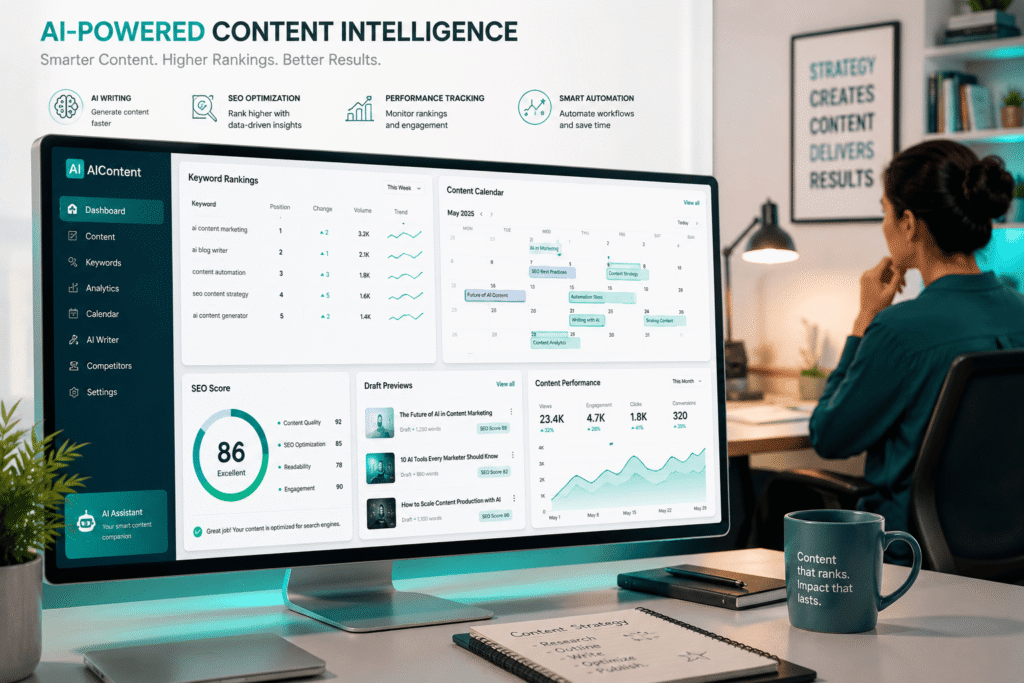
SEO has always been a discipline that rewards consistency, comprehensiveness, and responsiveness to algorithmic changes. The challenge is that search engines update their algorithms frequently, competitive landscapes shift constantly, and the technical requirements for strong rankings grow more complex each year. Keeping pace manually is increasingly difficult even for dedicated SEO teams.
AI agents can transform SEO from a periodic activity into a continuous operation. They can monitor keyword rankings across thousands of terms simultaneously, detect algorithmic fluctuations and their impact on performance, identify emerging keyword opportunities before competitors capitalize on them, audit technical SEO health across entire websites, build prioritized optimization recommendations, and implement content updates.
The competitive advantage of continuous SEO operation versus periodic reviews is substantial. Rankings that might take months to recover from neglect can be maintained and improved through constant attention. Emerging opportunities can be captured before the market becomes crowded.
3. Paid Advertising Optimization
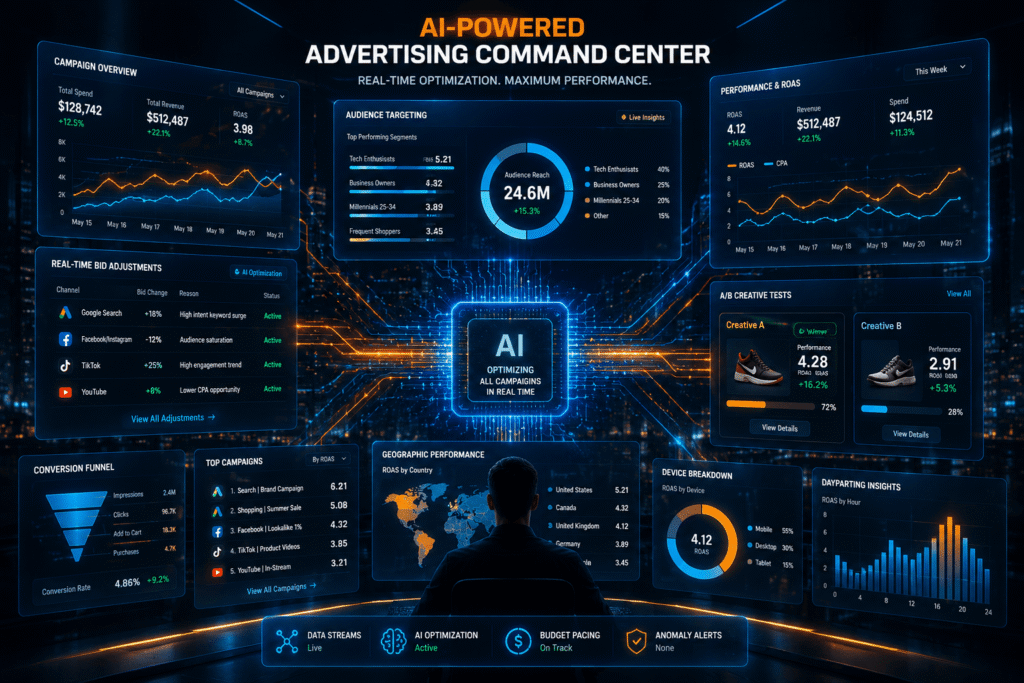
Managing paid advertising campaigns across Google, Meta, LinkedIn, and other platforms has become extraordinarily complex. Bid management, audience targeting, creative testing, budget allocation, and performance analysis each require significant expertise and time. The pace of change in auction dynamics means that campaigns left unattended for even short periods can suffer significant performance degradation.
AI agents are exceptionally well-suited to paid advertising management. They can monitor campaign performance in real time, adjust bids dynamically based on conversion probability signals, reallocate budgets toward highest-performing campaigns and away from underperformers, generate and test new ad creative variations, refine audience targeting based on conversion data, and identify emerging opportunities like trending search queries or underpriced audience segments.
Early adopters of AI-powered paid advertising management report not only improved ROAS but also reduced wasted spend. Budgets are allocated more efficiently, bids are more precisely calibrated to conversion value, and creative fatigue is addressed proactively rather than reactively.
4. Social Media Management
Maintaining a consistent, engaging social media presence across multiple platforms requires significant resources. Content must be created, scheduled, published, and responded to at high frequency. Trends must be monitored and capitalized on quickly. Audience sentiment must be tracked. Competitors must be watched.
AI agents can manage the full social media workflow. They monitor trending topics and cultural conversations relevant to the brand, generate platform-optimized content, schedule posts for peak engagement windows, respond to comments and messages, track brand mentions and sentiment across platforms, and provide performance analysis that informs future content strategy.
The result is the ability to maintain an active, engaging, responsive social media presence at scale — without the headcount that would traditionally be required.
5. Customer Personalization
Personalization has become a baseline expectation rather than a differentiating luxury. Customers who receive generic, untargeted communications increasingly tune them out or disengage entirely. The brands winning attention and loyalty are those delivering experiences that feel individually relevant.
AI agents can power true one-to-one personalization by continuously analyzing each customer’s purchase history, browsing behavior, content engagement patterns, communication preferences, lifecycle stage, and predictive propensity signals. Based on this dynamic profile, they can tailor every touchpoint — website content, email messaging, product recommendations, advertising creative, and customer service responses — to the individual.
This level of personalization was previously possible only for the largest enterprises with massive data infrastructure investments. AI agents are democratizing it, making sophisticated personalization accessible to businesses of all sizes.
6. Email Marketing Optimization
Despite being one of the oldest digital marketing channels, email remains one of the highest-ROI activities in the marketing mix. It is also one of the areas where AI agents can deliver the most immediate and measurable impact.
AI agents can optimize every dimension of email marketing: subject line testing and selection, send time optimization at the individual subscriber level, dynamic content personalization within emails, audience segmentation and re-segmentation based on behavioral signals, automated lifecycle sequence optimization, and predictive identification of subscribers at risk of churning.
Rather than sending the same email to a broad segment and hoping for the best, AI-powered email marketing sends the right message to the right person at the right time through the right channel — and continuously refines this judgment based on outcomes.
7. Customer Journey Orchestration
Perhaps the most sophisticated application of AI agents in marketing is the orchestration of complete customer journeys across all channels and touchpoints. Rather than managing individual channel activities in silos, a customer journey AI agent maintains a unified view of each prospect and customer, coordinates messaging across all channels to deliver a coherent and progressively optimized experience, identifies moments of opportunity and risk throughout the funnel, and dynamically adjusts the journey based on individual behavior.
This represents a fundamental shift in how marketing operates — from channel-centric execution to customer-centric orchestration. The customer’s experience becomes the organizing principle, and all channel activities are coordinated in service of it.
The Real Business Benefits of AI Agent Adoption
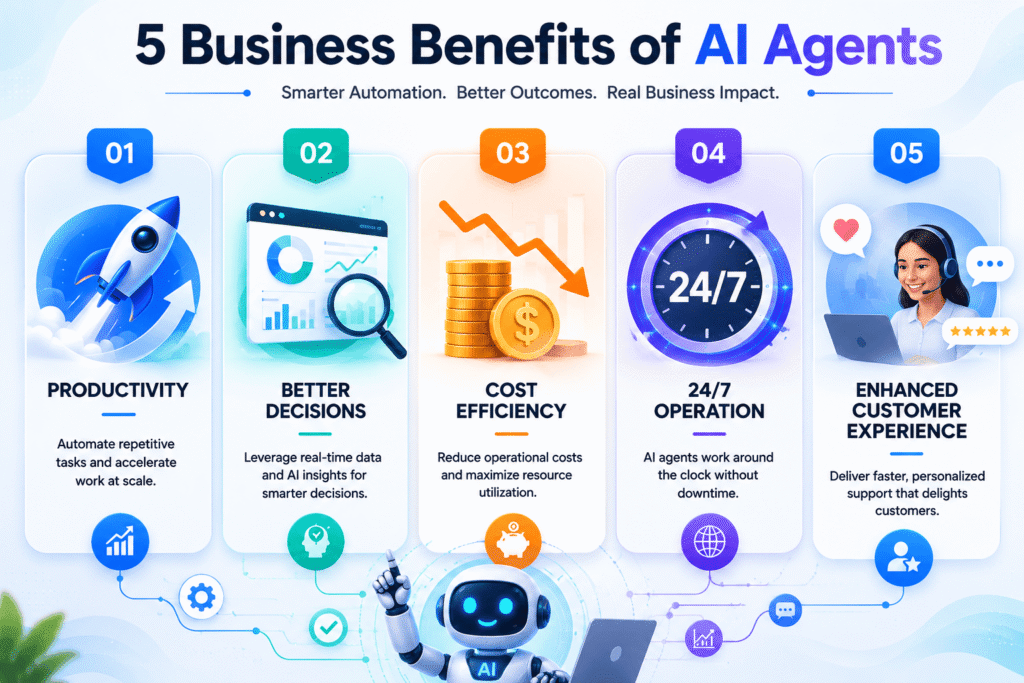
The practical benefits of deploying AI agents in marketing operations are extensive and well-documented by early adopters.
Dramatic Productivity Gains
Marketing teams spend enormous portions of their time on repetitive, time-consuming tasks: writing reports, pulling data from multiple systems, adjusting campaign settings, responding to routine inquiries, updating content. AI agents automate these activities completely, freeing human marketers to focus their attention on the high-value strategic and creative work that genuinely requires human judgment.
Organizations report that AI agents can absorb the equivalent of multiple full-time positions worth of operational work, enabling teams to achieve significantly more output without proportional headcount growth. This is particularly valuable in an environment where marketing budgets are under constant pressure.
Significantly Better Decision-Making
Human marketers, however talented, are limited in the data they can process and the analytical frameworks they can simultaneously apply. AI agents process enormous volumes of data continuously, identify non-obvious patterns, surface predictive insights, and translate analysis directly into action recommendations. Decisions become faster, more data-driven, and more consistently optimal.
The quality of decision-making improves not just at the individual level but organizationally. AI agents apply consistent analytical rigor across all campaigns and channels, eliminating the variability that comes from individual human judgment differences.
Substantial Cost Efficiency
The cost implications of AI agent adoption are significant. Organizations can achieve substantially more marketing output with smaller teams. Campaign management overhead falls. Content production costs decrease. Media spend becomes more efficient through better optimization. Customer acquisition costs improve as personalization and targeting sharpen.
These cost improvements compound over time as AI agents learn and improve. The organizations deploying AI agents today are building increasingly efficient marketing operations that will widen their competitive cost advantage year by year.
Continuous 24/7 Operation
Human marketing teams work defined hours. Campaigns go unmonitored overnight. Opportunities that emerge on weekends wait until Monday. Customer inquiries received outside business hours sit unanswered.
AI agents operate continuously. Bids are adjusted in real time, around the clock. Content opportunities are captured as they emerge. Customer interactions are handled immediately, regardless of when they occur. Campaigns are optimized based on performance data the moment it becomes available.
In competitive markets where speed matters, the ability to operate continuously without degradation provides a meaningful advantage.
Enhanced Customer Experience
The cumulative effect of AI-powered personalization, faster response times, more relevant recommendations, and consistent cross-channel communication is a materially improved customer experience. Customers receive interactions that feel more relevant, more helpful, and more respectful of their time.
This translates directly into business outcomes: higher satisfaction scores, improved retention rates, greater lifetime value, and stronger brand advocacy. The investment in AI agents pays dividends not just in marketing efficiency but in the quality and durability of customer relationships.
Challenges and Considerations in AI Agent Adoption
The promise of AI agents is substantial, but realistic adoption requires honest acknowledgment of the challenges involved. Organizations that approach AI agent deployment with clear eyes about these challenges are far better positioned to succeed.
Data Privacy and Regulatory Compliance
AI agents, to function effectively, require access to significant volumes of customer data. They need behavioral signals, transaction histories, communication preferences, demographic information, and more. The collection, storage, processing, and use of this data must comply with an increasingly complex global patchwork of privacy regulations.
Organizations must ensure that their AI agent deployments are designed with privacy compliance as a first principle, not an afterthought. Data governance frameworks, consent management systems, and regular compliance audits are essential components of responsible AI agent adoption. Failure in this area carries not just regulatory risk but significant reputational damage.
Accuracy, Hallucination, and Quality Control
Despite their remarkable capabilities, AI agents are not infallible. They can generate inaccurate information, make suboptimal decisions based on flawed data, or produce outputs that don’t meet brand standards. The risks of these failures vary significantly by application — a slightly suboptimal email subject line is inconsequential; a factually incorrect piece of content published under the brand’s name is serious.
Human oversight remains essential, particularly for high-stakes outputs. Organizations should design their AI agent workflows with appropriate quality control checkpoints, escalation protocols for edge cases, and ongoing monitoring of output quality. AI agents augment human judgment — they do not replace the need for it entirely.
Ethical Considerations and Responsible AI
As AI agents become more capable and more deeply integrated into customer-facing operations, ethical considerations grow in importance. Questions of transparency — should customers know when they are interacting with an AI system? — require deliberate policy decisions. Issues of algorithmic bias — are AI agent decisions treating all customer segments fairly? — require ongoing monitoring and correction.
Organizations that invest in responsible AI frameworks, including clear governance structures, bias detection processes, and transparent customer communication policies, build the trust that is ultimately essential for sustainable AI-powered growth.
Integration Complexity and Technical Debt
Implementing AI agents effectively is not a simple plug-and-play operation. Most organizations have existing marketing technology stacks that include multiple platforms, databases, and systems that were not designed with AI agent integration in mind. Connecting these systems, ensuring data flows reliably, and maintaining integration health as platforms update requires meaningful technical investment.
Organizations should budget not just for the AI agent platforms themselves but for the integration work, data infrastructure improvements, and ongoing technical maintenance required to make them effective. A well-architected implementation takes more time upfront but pays dividends in reliability and scalability.
Change Management and Organizational Readiness
Perhaps the most underestimated challenge in AI agent adoption is the human side: helping marketing teams understand, trust, and effectively work alongside AI agents. Resistance to change, fear of job displacement, and skepticism about AI outputs are real dynamics that can undermine adoption even when the technology is working well.
Successful AI agent adoption requires deliberate change management: clear communication about how roles will evolve, investment in training and skill development, and visible leadership commitment to using AI as an augmentation tool rather than a replacement for human talent.
The Future of AI Agents in Marketing: 2026 and Beyond
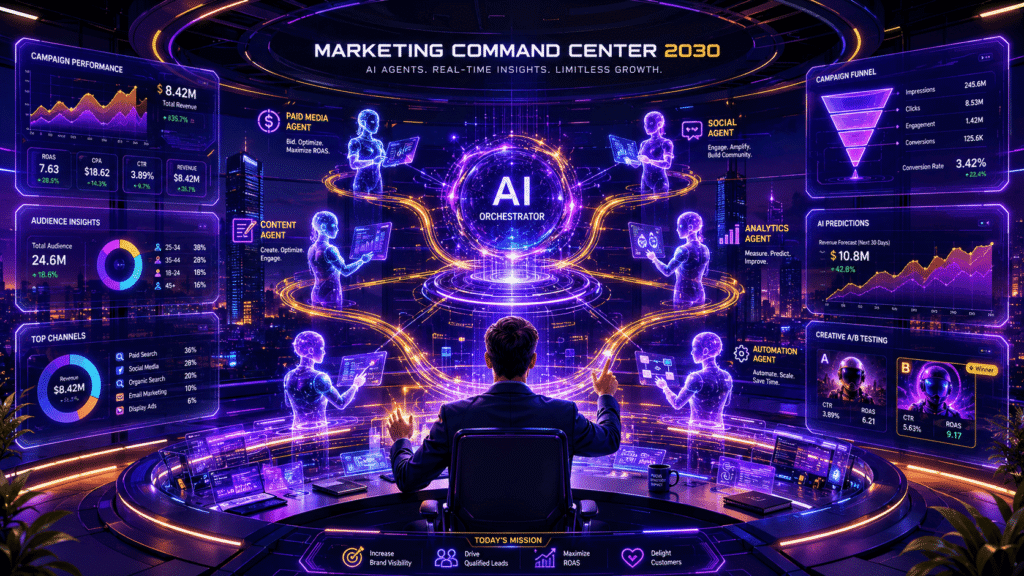
The AI agents available today, impressive as they are, represent an early iteration of what is coming. The next five years will likely bring capabilities that make current implementations look primitive by comparison.
Future AI agents will likely be capable of managing complete marketing departments with minimal human supervision, coordinating omnichannel campaigns that adapt in real time to macro market conditions as well as individual customer behaviors. They will conduct independent market research, synthesizing signals from competitive intelligence, consumer sentiment, economic indicators, and cultural trends to recommend strategic pivots. They will negotiate advertising placements and media purchases autonomously. They will build and continuously refine predictive growth models that anticipate demand shifts before they become visible in performance data.
The implications for marketing organization structures are profound. The marketing department of 2030 will look fundamentally different from the marketing department of 2020. Headcount will concentrate in strategic, creative, and governance roles. Operational execution — the vast majority of day-to-day marketing work today — will be largely autonomous.
Marketing professionals will increasingly become strategic supervisors and creative directors rather than operational executors. The skills that will be most valuable are not tactical channel expertise but rather the ability to set clear objectives, evaluate AI outputs critically, identify the strategic opportunities that AI systems miss, and build the human connections that no algorithm can replicate.
This is not a dystopian future for marketing professionals. It is an opportunity for those willing to evolve. The most valuable marketers of the next decade will be those who develop deep AI collaboration skills, who can direct autonomous systems toward ambitious goals, and who bring the irreducibly human capabilities — empathy, creativity, ethical judgment, cultural intuition — that make marketing resonate at the deepest level.
How Businesses Can Prepare for the AI Agent Era
The window for establishing an early advantage in AI-powered marketing is open now. Organizations that begin building their capabilities and infrastructure today will be meaningfully ahead of those who wait until the technology becomes ubiquitous.
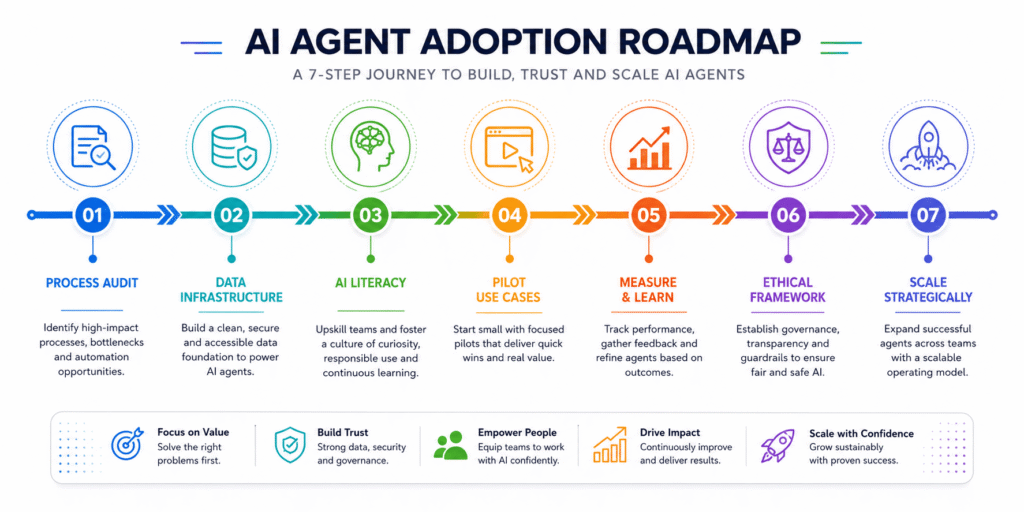
Step 1: Conduct a Comprehensive Process Audit
Before deploying AI agents, understand exactly what your marketing team does and how they spend their time. Map out workflows in detail, identifying where time is spent, where errors occur, where delays happen, and where human judgment is genuinely essential versus where it is applied to tasks that could be automated. This audit becomes the prioritization framework for your AI agent roadmap.
Step 2: Invest in Data Infrastructure and Quality
AI agents are only as effective as the data they work with. Poor data quality — incomplete customer records, fragmented data silos, inconsistent attribution — severely limits what AI agents can achieve. Before or alongside deploying AI agents, invest in cleaning and consolidating your data infrastructure. Build a unified customer data platform if you don’t have one. Establish data governance standards. The returns on this foundational investment compound over time.
Step 3: Build AI Literacy Across Your Marketing Organization
The most common reason AI agent deployments underperform is not the technology — it is the gap between what the technology can do and what the team deploying it understands. Invest in building genuine AI literacy across your marketing organization. This doesn’t mean making everyone a technical expert, but it does mean ensuring that marketers understand what AI agents can and cannot do, how to evaluate their outputs critically, and how to design workflows that leverage AI strengths while maintaining appropriate human oversight.
Step 4: Start with High-Impact, Lower-Risk Use Cases
Resist the temptation to deploy AI agents everywhere at once. Start with use cases where the potential impact is high but the risk of failure is manageable. Content optimization, email subject line testing, paid advertising bid management, and SEO monitoring are all excellent starting points. Build confidence, develop operational expertise, and create internal success stories that generate organizational buy-in for more ambitious deployments.
Step 5: Measure Rigorously and Learn Continuously
AI agent performance should be tracked with the same rigor applied to any significant marketing investment. Establish clear KPIs for each deployment — cost per acquisition, content production velocity, campaign optimization speed, customer satisfaction scores — and measure against them consistently. Use this data not just to evaluate the technology but to continuously refine how you are using it.
Step 6: Develop an Ethical AI Framework
Before deploying AI agents in customer-facing applications, develop clear organizational policies on responsible AI use. Address questions of transparency, fairness, data privacy, and human oversight explicitly. Having these frameworks in place before problems arise is far easier than developing them under pressure after an incident.
Step 7: Scale Strategically
As early deployments prove their value, build an evidence-based roadmap for expanding AI agent use across your marketing operations. Prioritize expansions based on demonstrated ROI and organizational readiness rather than technology enthusiasm. The goal is not to deploy AI agents everywhere as quickly as possible but to build a sustainable, high-performing AI-augmented marketing operation.
Check out our detailed guide on top digital marketing agencies in Ahmedabad to find the right partner for your business growth.
Conclusion: The Autonomous Marketing Era Has Begun
AI agents represent far more than another marketing technology trend to evaluate and file away for future consideration. They are the foundation of a new era in digital marketing — one that is already underway and accelerating rapidly.
The businesses that will define the next decade of their industries are not those waiting for AI agents to mature further or for adoption to become mainstream before acting. They are the organizations taking measured but urgent steps today to understand the technology, build the infrastructure, develop the organizational capabilities, and begin accumulating the experience that turns early adoption into durable competitive advantage.
Just as businesses that built early websites in the late 1990s were better positioned for the digital-first economy that followed, and just as brands that developed social media expertise in the early 2010s were better positioned for the attention economy that emerged, the organizations investing in AI agent capabilities now are positioning themselves for the autonomous marketing era ahead.
The advantages of AI agent adoption are not merely operational. They are strategic and compounding. Better data, better learning, better outcomes, reinvested into further optimization — this virtuous cycle accelerates over time and becomes increasingly difficult for late movers to replicate.
The future of marketing is no longer simply automated. It is not merely data-driven. It is not just AI-assisted.
It is autonomous. And it is here.
The organizations that begin building their AI agent capabilities today will not just be more efficient marketers tomorrow. They will be the industry leaders, the category definers, and the brands that customers increasingly choose — because they will deliver better experiences, faster, at scale, continuously improving.
The shift has begun. The only question is where your organization stands within it.