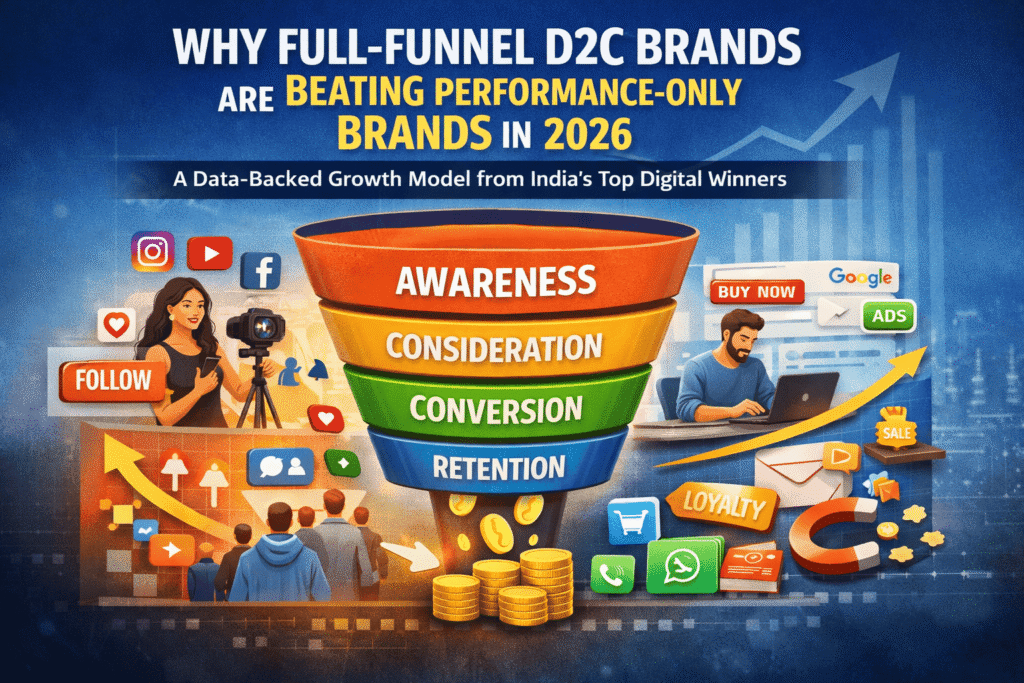
A Data-Backed Growth Model from India’s Top Digital Winners
India’s D2C ecosystem has matured.
And with maturity comes friction.
Customer acquisition costs are rising.
Attention spans are shrinking.
Performance marketing is no longer forgiving.
Yet, despite these headwinds, a select group of consumer brands continue to scale profitably, predictably, and at national scale.
They are not winning because they discovered a new ad hack.
They are winning because they stopped relying on hacks altogether.
Brands like Mamaearth, Minimalist, Boat, Wow Skin Science, and similar category leaders have quietly transitioned from performance-led marketing to full-funnel digital growth systems.
This article breaks down why full-funnel brands are outperforming performance-only brands in 2026, using real execution patterns, industry benchmarks, and observed outcomes from India’s fastest-growing D2C players.
This is not a motivational piece.
This is a system analysis.
The End of the Performance-Only Era
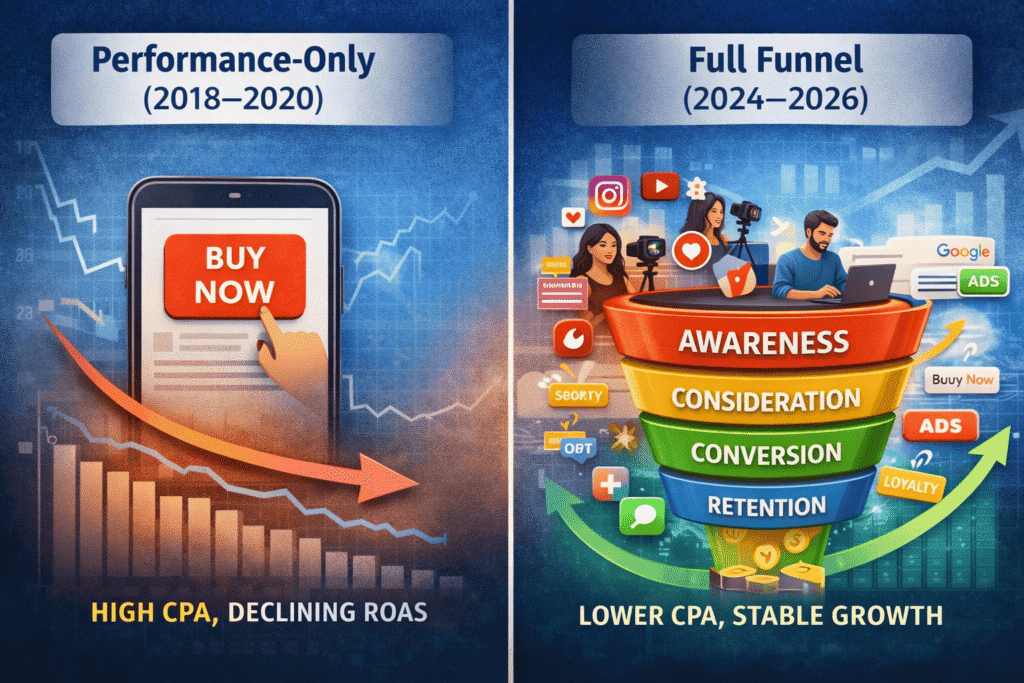
For nearly a decade, Indian D2C growth followed a simple playbook:
- Launch ads on Facebook and Instagram
- Optimize for conversions
- Scale budgets when ROAS looks good
In the early days, this worked.
CPMs were low.
Audiences were underexposed.
Competition was limited.
A well-designed conversion campaign could build a ₹50–₹100 crore brand within a few years.
That era is over.
What Changed?
- Audience Saturation
Indian consumers now see hundreds of ads per day. Most are ignored. Performance ads aimed at cold audiences face instant resistance. - Platform Maturity
Meta and Google have optimized delivery, but that also means competition for the same intent signals. - Rising CPMs
In many D2C categories, CPMs have doubled or tripled compared to 2019–2020. - Trust Deficit
New brands struggle because consumers no longer trust unknown products on first exposure.
Performance marketing didn’t stop working.
It simply stopped working alone.
The Core Insight: Demand Is Engineered, Not Bought
High-performing D2C brands realized a critical truth:
You cannot convert demand that doesn’t exist yet.
Performance ads harvest existing intent.
Branding creates future intent.
Full-funnel brands stopped treating branding and performance as opposing forces and instead designed systems where branding feeds performance.
This shift explains why full-funnel advertisers consistently report:
- 20–35% lower CPA
- More stable ROAS at scale
- Higher lifetime value (LTV)
- Lower dependency on discounts
The difference lies in funnel architecture, not ad creativity alone.
Understanding the Full-Funnel Growth Model
At its core, a full-funnel system divides growth into four distinct stages, each with different objectives, creatives, metrics, and targeting logic.
- Awareness
- Consideration
- Conversion
- Retention & Advocacy
Each stage solves a different psychological problem for the customer.
Trying to compress all four into one ad is where most brands fail.
Stage 1: Awareness
Turning Unknown Brands into Familiar Names
The Objective
At the awareness stage, the goal is not sales.
It is mental availability.
When a customer later experiences a problem, your brand should already exist in their memory.
This is where most performance-only brands struggle, because awareness does not show immediate ROI.
Full-funnel brands accept this trade-off early.
Channels That Dominate Awareness in India
- Instagram Reels
- Facebook video ads
- YouTube influencer content
- Creator-led short-form video
Instagram, in particular, has become the primary discovery engine for D2C brands in India.
Multiple industry studies indicate that 60–70% of first-time brand discovery in beauty, personal care, and lifestyle categories now happens on Instagram.
What Winning Brands Do Differently
Instead of pushing product offers, awareness creatives focus on:
- Problem identification
- Ingredient education
- Category myths and truths
- Lifestyle integration
- Purpose-driven narratives
Mamaearth’s early focus on toxin-free education is a clear example.
The brand didn’t sell shampoo.
It sold safety, care, and consciousness.
This created emotional familiarity before transactional intent.
Metrics That Matter at This Stage
Awareness success is measured differently:
- Reach and frequency
- Video watch time
- Engagement velocity
- Follower growth trends
CTR and conversions are deliberately deprioritized here.
This stage exists to feed the rest of the funnel with low-cost, high-volume audiences.
Stage 2: Consideration
Converting Attention into Interest
Awareness without follow-up is wasted spend.
The second stage of the funnel exists to build conviction.
This is where brands answer the customer’s silent questions:
- Is this product actually good?
- Will it work for me?
- Can I trust this brand?
Cold vs Warm Audiences
At this stage, audiences are segmented clearly.
Cold audiences:
- Video viewers
- Interest-based users
- Lookalikes
Warm audiences:
- Instagram profile engagers
- Website visitors
- Influencer content viewers
- Past ad engagers
The messaging changes completely.
Consideration Creatives That Convert
Winning brands use:
- Short explainer videos
- Carousel ads explaining routines
- Before-after visuals (where compliant)
- Influencer testimonials
- User-generated content
Crucially, discounts are delayed.
Instead of “Buy Now”, the messaging shifts to:
- “Here’s how it works”
- “Here’s why people trust us”
- “Here’s how to use it correctly”
This builds belief before urgency.
Data-Backed Impact of Consideration Campaigns
Brands that invest in structured consideration stages observe:
- 1.5–2× higher conversion rates later
- Lower CPA in conversion campaigns
- Reduced dependency on aggressive offers
This stage quietly does the heavy lifting.
Stage 3: Conversion
Where Performance Marketing Finally Shines
Only after awareness and consideration does pure performance marketing activate fully.
At this point, the brand is no longer unknown.
The product is no longer unfamiliar.
The job of conversion ads is simple: remove friction.
Channels Used at Conversion Stage
- Meta purchase-optimized campaigns
- Google Search for high-intent keywords
- Dynamic product remarketing
- App install and re-engagement campaigns
Search, in particular, plays a critical role here, capturing users who are already convinced but need validation.
Conversion Optimization Levers
Winning brands optimize for:
- Mobile-first landing pages
- Fast checkout flows
- COD availability
- Bundles to increase AOV
- Limited-time offers triggered contextually
Notice the sequencing.
Offers appear after trust, not before.
This is why conversion ads don’t have to work as hard.
Metrics That Matter Here
- CPA
- Conversion rate
- ROAS
- Average order value
When earlier funnel stages are strong, these metrics stabilize even at scale.
Instagram: The Backbone of the Modern Funnel
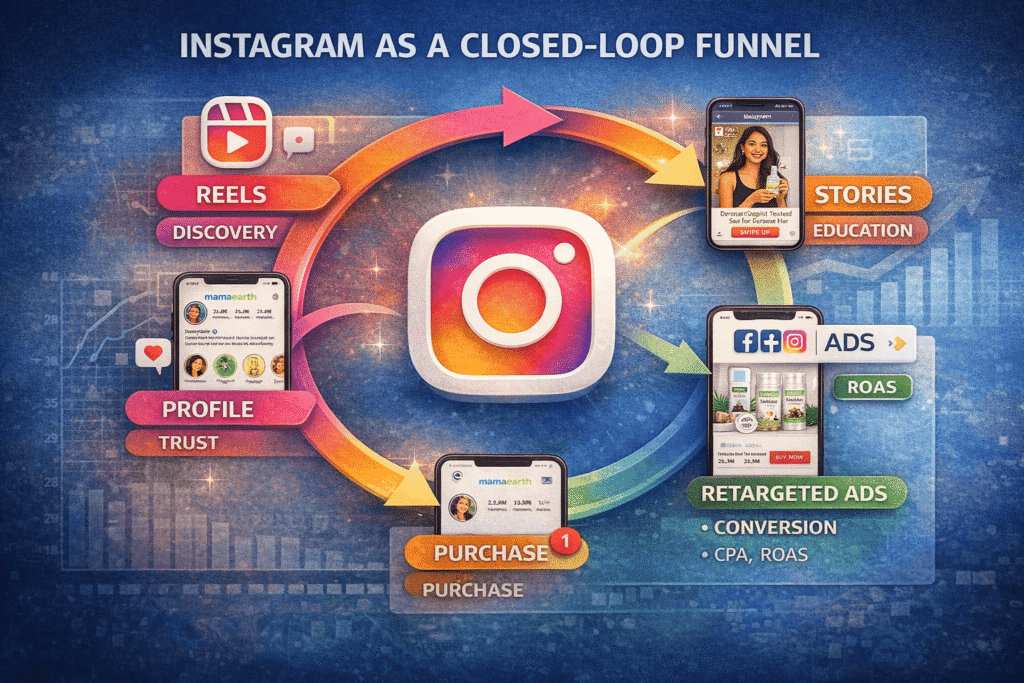
Instagram is no longer a “social media channel”.
It is:
- A discovery engine
- A research platform
- A conversion layer
Winning brands design Instagram as a closed-loop growth system.
Instagram’s Role by Funnel Stage
Awareness
- Reels for reach
- Creator collaborations
- Educational content
Consideration
- Stories explaining benefits
- Highlights for FAQs and reviews
- Saved influencer testimonials
Conversion
- Retargeted ads to profile engagers
- Shoppable posts
- Story-based limited-time offers
This allows customers to discover, evaluate, and convert without leaving the ecosystem.
Facebook: Scale, Stability, and Demographic Depth
While Instagram drives aspiration, Facebook delivers:
- Broader age reach
- Cost-efficient retargeting
- Better penetration in Tier-2 and Tier-3 cities
For many D2C brands, Facebook remains the most stable platform for:
- Scaling winning creatives
- Retargeting older cohorts
- App install campaigns
Facebook doesn’t lead growth anymore.
But it supports it reliably.
Tier-Wise Targeting: One India, Many Markets
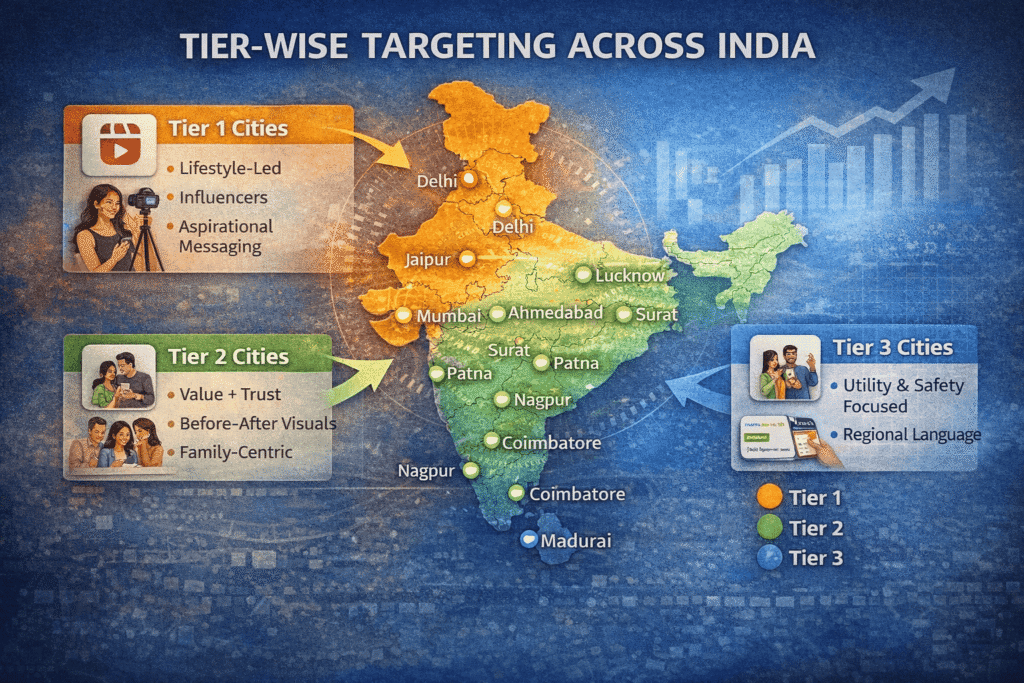
India is not one market.
Full-funnel brands understand this deeply.
Tier 1 Cities
- Lifestyle-led messaging
- Influencer-heavy creatives
- Aspirational positioning
Tier 2 Cities
- Value and trust emphasis
- Before-after visuals
- Family-oriented narratives
Tier 3 Cities
- Safety and utility focus
- Regional language creatives
- Problem-solution framing
Localization improves relevance, lowers CPMs, and increases conversion efficiency.
Influencer Marketing: Trust at Industrial Scale
Influencers are not a branding luxury anymore.
They are a trust infrastructure.
Winning brands:
- Work with thousands of micro-creators
- Focus on niche relevance, not celebrity reach
- Repurpose influencer content into paid ads
Industry data suggests influencer-led content, when amplified via ads, contributes 30–40% of online sales impact.
Influencers don’t just attract attention.
They shorten the trust cycle.
Retention: The Most Underrated Growth Lever
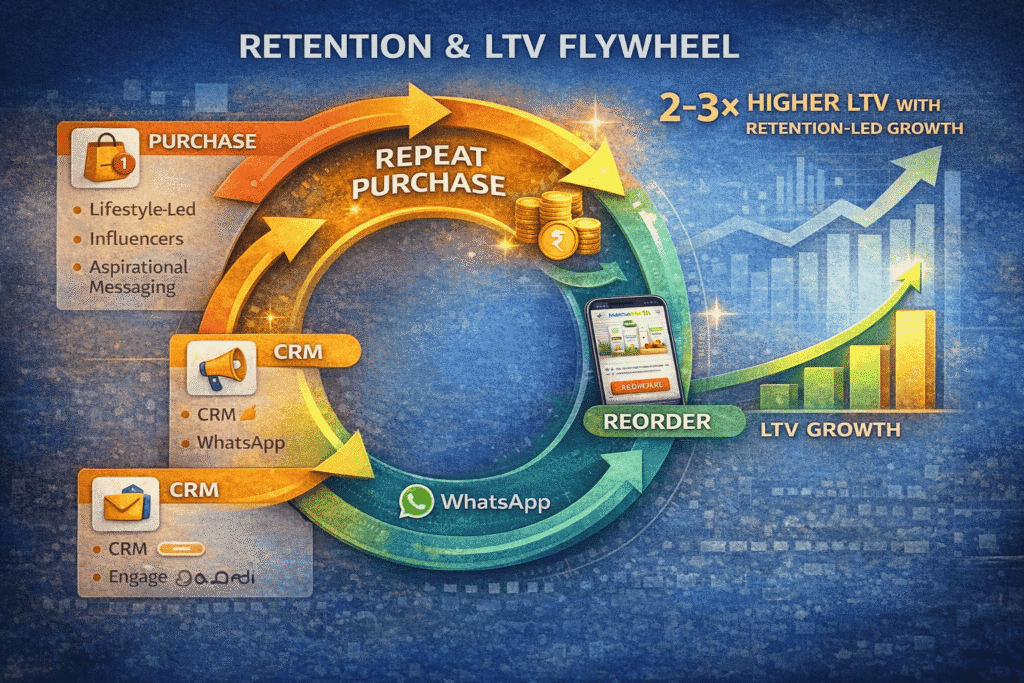
Acquisition is expensive.
Retention is profitable.
Full-funnel brands invest heavily in:
- Email automation
- WhatsApp journeys
- Personalized reorder reminders
- Loyalty programs
CRM-led retention campaigns drive:
- Higher repeat purchase rates
- Improved LTV
- Reduced dependency on paid media
This is how brands sustain growth beyond the first sale.
Why Performance-Only Brands Struggle to Scale
Brands that rely only on conversion ads face structural issues:
- Rising CPAs
- Ad fatigue
- Low trust from cold audiences
- Volatile ROAS
Without awareness and consideration layers, performance ads are forced to educate, persuade, and convert in one step.
That is an expensive expectation.
AI Marketing Case Study in IndiaWhy Full-Funnel Brands Win Consistently
Full-funnel brands succeed because:
- Branding reduces performance costs
- Content educates before selling
- Creatives match intent stages
- Data guides decisions, not opinions
Growth becomes predictable instead of reactive.
Final Takeaway
In 2026, D2C growth is no longer about spending more.
It is about:
- Spending in the right sequence
- Building trust before urgency
- Designing funnels, not campaigns
Mamaearth and its peers didn’t scale because they were louder.
They scaled because they were structured.
And in today’s market, structure beats speed every time.
How Mamaearth Built a ₹1400 Crore Brand Using a Full-Funnel Digital Growth System