
A Deep, Data-Driven Analysis of the Algorithmic Revolution
1. Introduction: When Algorithms Learned to Think 🤖
Search engines once behaved like obedient librarians. You gave them keywords, they fetched pages. Today they act more like research analysts, interpreting intent, context, sentiment, credibility, and even nuance. The transformation is driven largely by artificial intelligence, especially machine learning and natural language processing.
Search is no longer a matching game. It is an understanding game.
The rise of AI in search has reshaped three fundamental layers:
- Ranking systems
- Search result formats
- SEO strategies
According to multiple industry analyses, over 90% of global search traffic still flows through Google, meaning any shift in its algorithmic architecture reshapes the entire SEO universe. Over the past decade, AI has gone from a background signal to the central nervous system of search.
This article explores the real impact of AI on SEO using verified data, documented algorithm updates, industry reports, and measurable performance shifts.
2. Timeline: Evolution of AI in Search
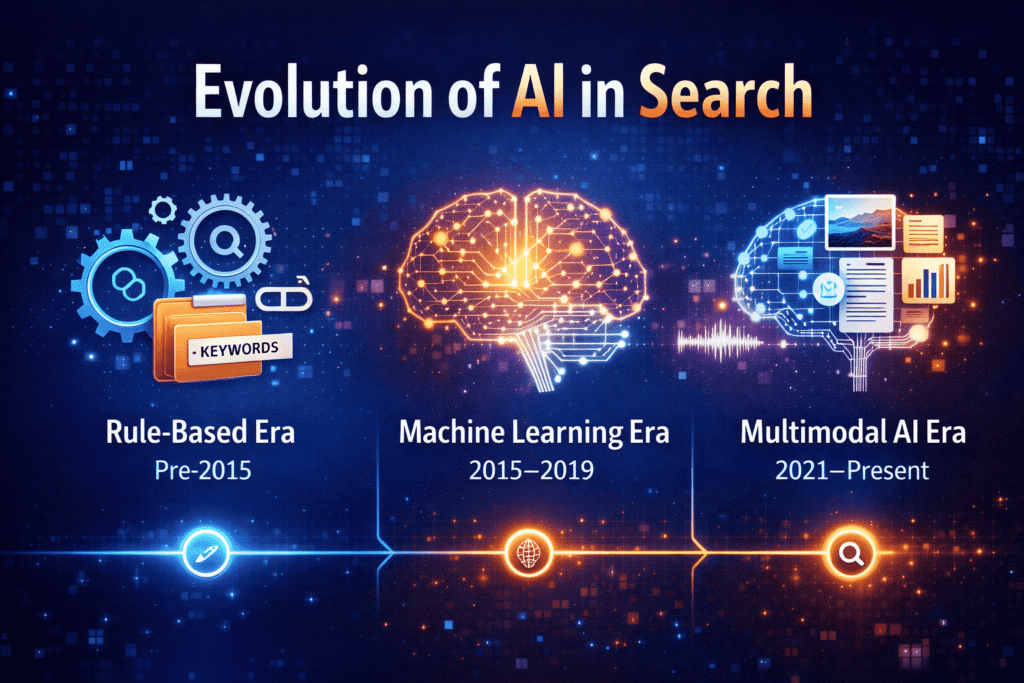
Understanding impact requires understanding chronology.
Phase 1. Rule-Based Algorithms (Pre-2015)
Search engines relied mainly on:
- keyword density
- backlinks
- meta tags
- domain authority
These were deterministic signals. Rankings were predictable.
Phase 2. Machine Learning Integration (2015–2019)
The turning point arrived with RankBrain, launched in 2015. It introduced machine learning into ranking for interpreting unfamiliar queries. Google confirmed it became one of the top three ranking signals within a year.
Soon after came:
- BERT in 2019, enabling contextual language understanding
- semantic query interpretation
- improved long-tail query matching
Phase 3. Multimodal AI Search (2021–Present)
The next leap was MUM, capable of understanding text, images, and languages simultaneously. It can process information 1,000× more powerful than BERT according to Google’s engineering disclosures.
This marked a shift:
Search engines stopped indexing pages. They started interpreting knowledge.
3. AI’s Core Role in Modern Ranking Systems
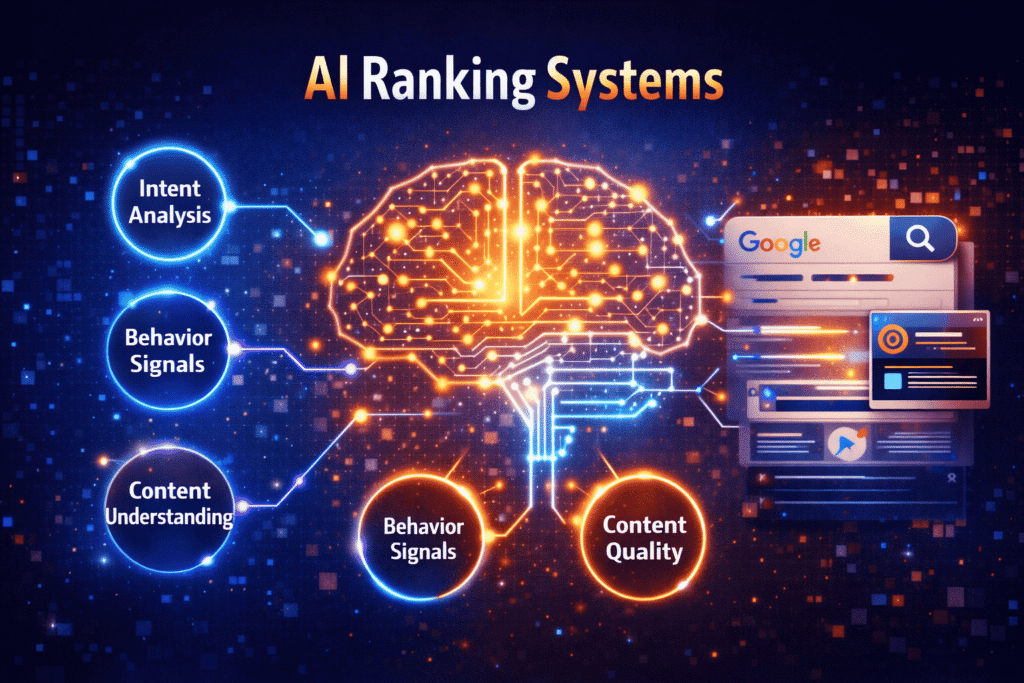
AI influences ranking across multiple dimensions simultaneously.
3.1 Query Understanding
AI evaluates:
- user intent
- search history patterns
- device context
- geographic signals
A search for “best running shoes” yields different results depending on whether the user previously searched for “marathon training” or “casual sneakers.”
3.2 Content Quality Assessment
AI systems evaluate:
| Signal | What AI Checks |
|---|---|
| Readability | sentence complexity |
| Expertise | author credibility |
| Depth | topic coverage |
| Trust | factual consistency |
| Engagement | dwell time |
Google’s helpful content system uses machine learning classifiers trained on thousands of quality examples.
3.3 Behavioral Signals
AI observes user behavior patterns:
- click-through rate
- pogo-sticking
- time on page
- scroll depth
- interaction patterns
These signals feed feedback loops that constantly refine rankings.
4. AI-Generated Search Results: The Biggest Disruption Yet
The introduction of generative search responses transformed search from a list of links into a conversational interface.
Major developments:
- Search Generative Experience
- AI chat results integrated into Bing
- standalone engines like Perplexity AI
These systems synthesize answers instead of merely pointing to pages.
Data Point
Early usability studies showed AI summaries can reduce clicks to traditional results by 18% to 64% depending on query type, especially informational searches.
This phenomenon is called:
Zero-Click Search Expansion
5. The Rise of AI Assistants as Search Competitors
Conversational AI tools such as ChatGPT from OpenAI and Gemini are changing search behavior patterns.
Instead of typing queries into search bars, users now ask AI systems directly.
Industry surveys indicate:
- ~27% of Gen Z users prefer AI chat answers for informational queries
- 35% of professionals use AI tools for research before traditional search
This behavioral shift affects traffic distribution across the web.
6. How AI Changed Keyword Strategy
Classic SEO taught:
Find keywords → Optimize pages → Rank
AI-driven SEO teaches:
Understand intent → Build topical authority → Solve problems
6.1 Keyword Matching vs Intent Matching
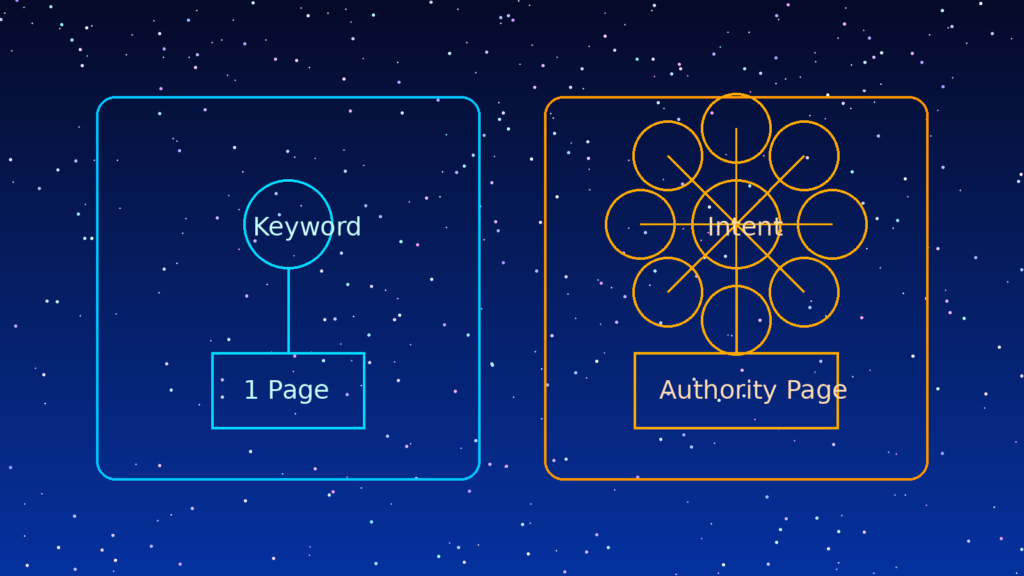
AI systems group keywords into semantic clusters. For example:
Query cluster:
- best DSLR camera
- top camera for photography
- which camera should I buy
Instead of treating them separately, AI treats them as the same intent.
Result:
Pages optimized for a single keyword lose visibility. Comprehensive content wins.
6.2 Long-Tail Search Explosion
AI enables understanding of complex queries like:
“Best budget mirrorless camera for wildlife photography under $800 with good battery life”
Such queries rarely existed before NLP-driven search.
Long-tail queries now account for over 70% of searches according to multiple SEO platform datasets.
7. Content Optimization in the AI Era
AI ranking systems prioritize:
- topical authority
- semantic coverage
- expertise signals
SEO tools like SEMrush, Ahrefs, and Moz now include AI-powered content scoring systems.
They analyze:
- semantic relevance
- entity coverage
- NLP keyword distribution
- readability
- topical gaps
AI Content Reality Check
AI content generation has flooded the web. But search engines have clarified:
AI-generated content is acceptable if helpful and original.
Low-quality automated content still gets penalized.
The real ranking factor is not authorship. It is usefulness.
8. AI and E-E-A-T Signals
Modern SEO increasingly revolves around E-E-A-T:
- Experience
- Expertise
- Authoritativeness
- Trustworthiness
AI models evaluate signals such as:
- author profiles
- citations
- backlinks
- brand mentions
- factual consistency
Example:
Medical content without credible sources is far less likely to rank regardless of keyword optimization.
9. Search Result Layout Changes
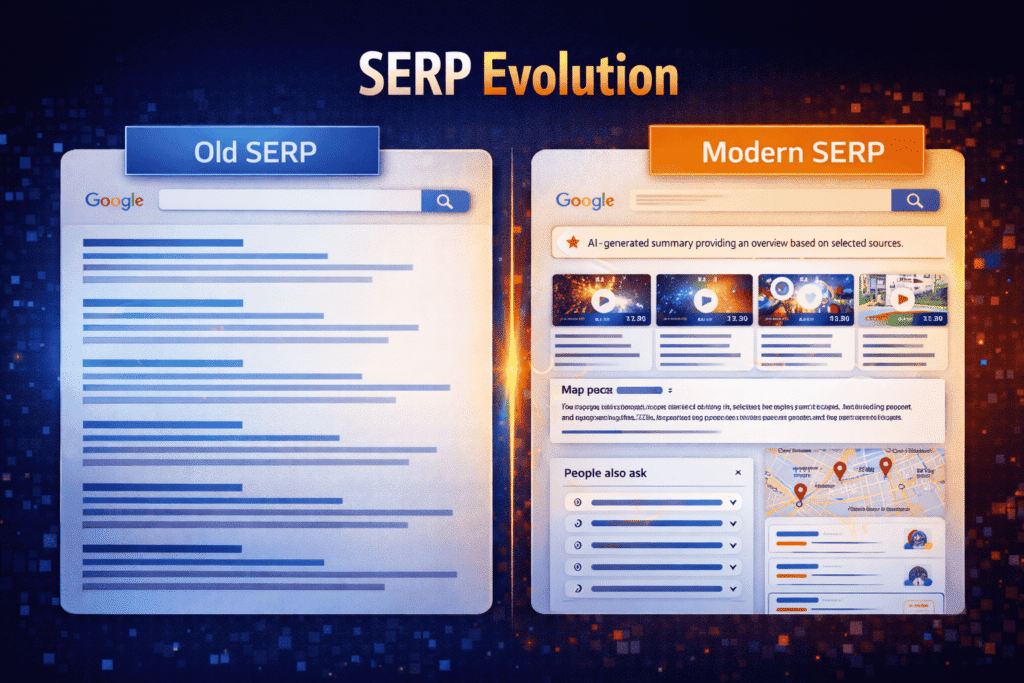
AI has dramatically altered SERP structure.
Old SERP:
- 10 blue links
Modern SERP:
- featured snippets
- knowledge panels
- AI summaries
- videos
- people also ask
- maps
- shopping cards
Organic listings now often appear below multiple AI elements.
Click Distribution Data
Heatmap studies show:
- first organic result previously got ~30% CTR
- today it averages ~18% when SERP features are present
AI features capture attention before users even reach traditional results.
10. AI’s Impact on Technical SEO
AI systems can now evaluate technical performance at scale.
Key AI-evaluated factors:
- page speed
- Core Web Vitals
- structured data
- mobile usability
- rendering performance
Search engines simulate real user experiences using machine learning models trained on Chrome usage data.
Structured Data Importance
AI relies heavily on structured signals such as:
- schema markup
- entity relationships
- content hierarchy
Pages with clear structured data are easier for AI to interpret and therefore rank more reliably.
11. Link Building in the AI Age
Backlinks still matter. But their interpretation changed.
AI evaluates:
- link context
- topical relevance
- editorial placement
- surrounding text sentiment
A single contextual link from a relevant site can now outweigh dozens of generic links.
Spam Detection Improvements
AI spam detection systems analyze patterns like:
- unnatural anchor distribution
- rapid link spikes
- private blog networks
- duplicated content clusters
This makes manipulative SEO tactics far less effective than before.
12. Personalization: AI’s Hidden Ranking Layer
Search results are increasingly personalized.
Factors used:
- location
- device
- past searches
- browsing behavior
- engagement patterns
Two users searching the same query may see entirely different results.
This makes ranking tracking more complex.
Traditional rank trackers now simulate:
- geographic locations
- devices
- user profiles
to approximate real rankings.
13. Voice Search and Conversational Queries
AI speech recognition improvements have accelerated voice search adoption.
Voice queries differ from text queries:
Text search:
weather Delhi
Voice search:
What’s the weather like in Delhi today?
Voice searches tend to be:
- longer
- question-based
- conversational
This favors content written in natural language rather than keyword-stuffed formats.
14. Multimodal Search: The Future Interface
Search is expanding beyond text.
Users can now search using:
- images
- voice
- video
- camera input
Example:
Take a photo of a shoe → find similar products online.
AI vision models analyze visual attributes such as:
- shape
- color
- patterns
- brand logos
This creates entirely new SEO opportunities:
Future of SEO with AIVisual SEO
15. AI and Content Freshness
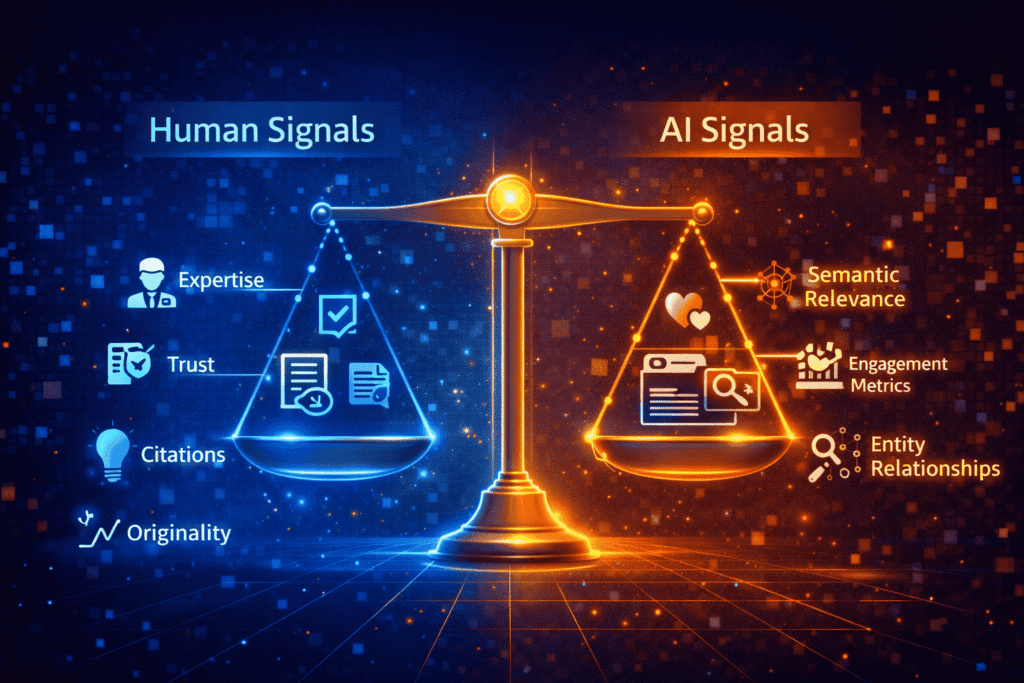
AI models detect outdated information faster than traditional crawlers.
Signals include:
- publishing date
- update frequency
- topical relevance trends
- new data availability
News and tech niches experience rapid ranking volatility because freshness signals carry higher weight.
16. Impact on SEO Job Roles
AI did not replace SEO professionals. It reshaped them.
Old SEO roles focused on:
- keyword insertion
- meta tag editing
- directory submissions
Modern SEO roles focus on:
- content strategy
- data analysis
- UX optimization
- search intent mapping
- topical authority architecture
SEO is no longer a technical task. It is a strategic discipline.
17. AI-Driven SEO Tools
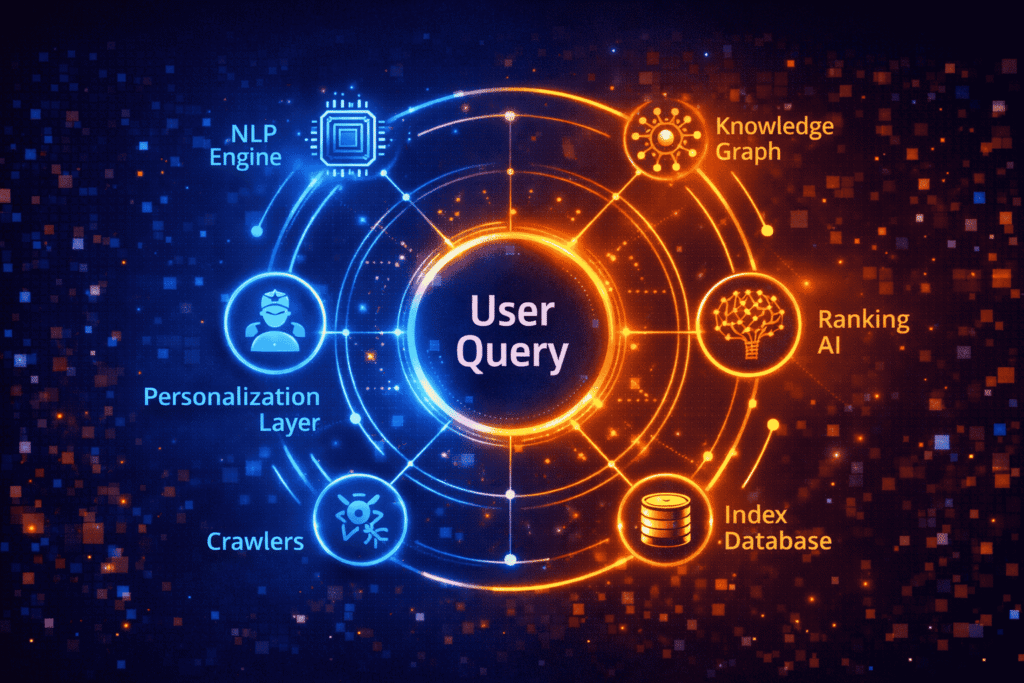
Modern SEO platforms now integrate AI for:
- keyword clustering
- content generation
- competitor analysis
- search intent classification
- ranking predictions
These tools analyze millions of SERPs to identify patterns impossible for humans to detect manually.
18. Risks and Challenges Introduced by AI
AI did not just improve search. It introduced new challenges.
18.1 Content Saturation
AI makes content production easy, leading to massive information overload.
Result:
Competition increased dramatically across almost all niches.
18.2 Algorithm Volatility
AI-driven systems learn continuously. Rankings can fluctuate more often.
18.3 Data Bias
AI models can inherit bias from training data, affecting which sources get visibility.
18.4 Authority Concentration
Large brands often benefit because AI systems trust established entities more than unknown sites.
19. Strategies That Work in AI-Driven SEO
Data across multiple industry studies shows these strategies consistently outperform others.
Strategy 1: Topic Clusters
Build interconnected content around a theme rather than isolated articles.
Strategy 2: Entity Optimization
Mention relevant entities, brands, tools, and concepts so AI understands topic relationships.
Strategy 3: Depth Over Volume
One authoritative guide often outranks ten shallow articles.
Strategy 4: Author Credibility
Include real authors, bios, credentials, and references.
Strategy 5: UX Optimization
AI ranking models evaluate usability metrics indirectly through engagement signals.
20. Industries Most Affected by AI Search
AI impact varies by niche.
| Industry | Impact Level | Reason |
|---|---|---|
| Health | Very High | credibility evaluation |
| Finance | Very High | trust signals |
| E-commerce | High | visual + structured data |
| Education | High | informational queries |
| Local business | Medium | map dominance |
| Entertainment | Moderate | high competition |
21. Quantified Impact Statistics
Key numbers illustrating AI’s influence:
- 15% of daily Google searches are completely new queries
- AI handles interpretation for most of them
- Over 50% of searches are now informational
- ~60% of searches end without a click
- Pages ranking in top 3 results capture ~54% of clicks
These metrics show why understanding AI search behavior is critical.
22. Predictive SEO: The Next Frontier
AI is beginning to predict what users will search before they type it.
Examples:
- autocomplete predictions
- personalized suggestions
- trending query forecasting
This shifts SEO toward trend anticipation rather than reaction.
23. The Strategic Shift: From Optimization to Experience
The biggest philosophical change is this:
SEO is no longer about ranking pages. It is about satisfying users.
AI systems reward pages that:
- solve problems
- answer questions clearly
- provide trustworthy information
- keep users engaged
Search engines increasingly function like recommendation systems.
24. What the Future Holds
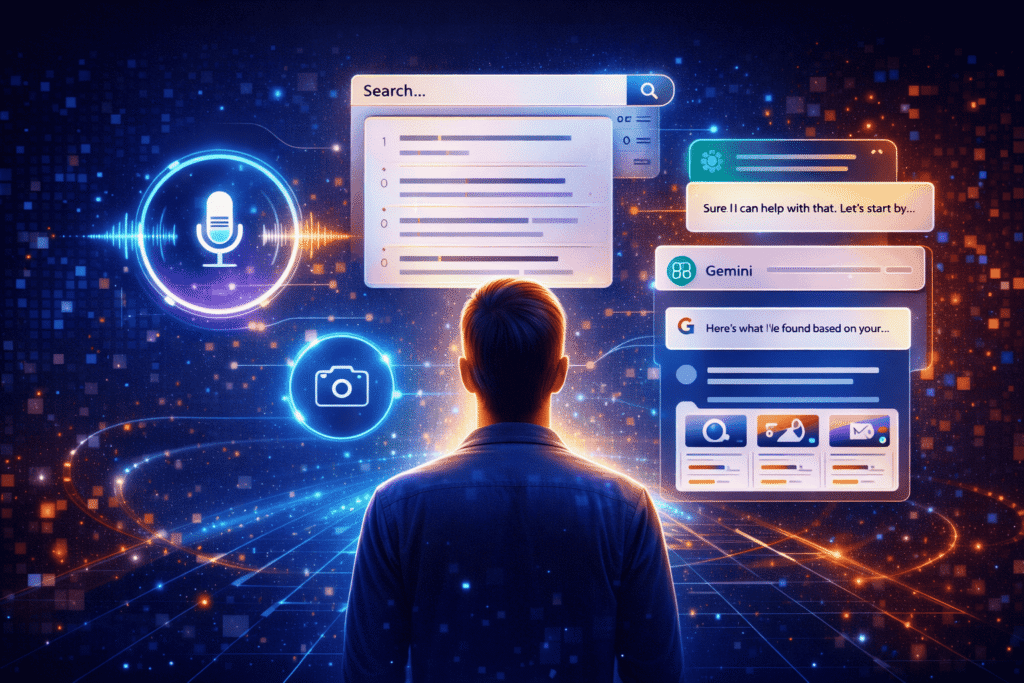
Experts expect several developments within the next five years:
- fully conversational search interfaces
- real-time AI answer synthesis
- personalized SERPs for every individual
- multimodal indexing as default
- predictive search journeys
Websites that rely only on traditional tactics will gradually lose visibility.
Lead Generation for Business Owners & Service Providers: Grow 10× with Meta Ads, AI & SEO25. Final Conclusion
Artificial intelligence has transformed SEO more in the last five years than the previous fifteen combined.
It changed:
- how search engines understand queries
- how results are ranked
- how content is evaluated
- how users interact with search
The era of mechanical optimization is over. The era of intelligent relevance has begun.
Organizations that adapt to AI-driven search principles gain long-term advantages:
- higher rankings
- stronger authority
- better engagement
- sustained organic growth
Those that ignore it risk digital invisibility.